How it works
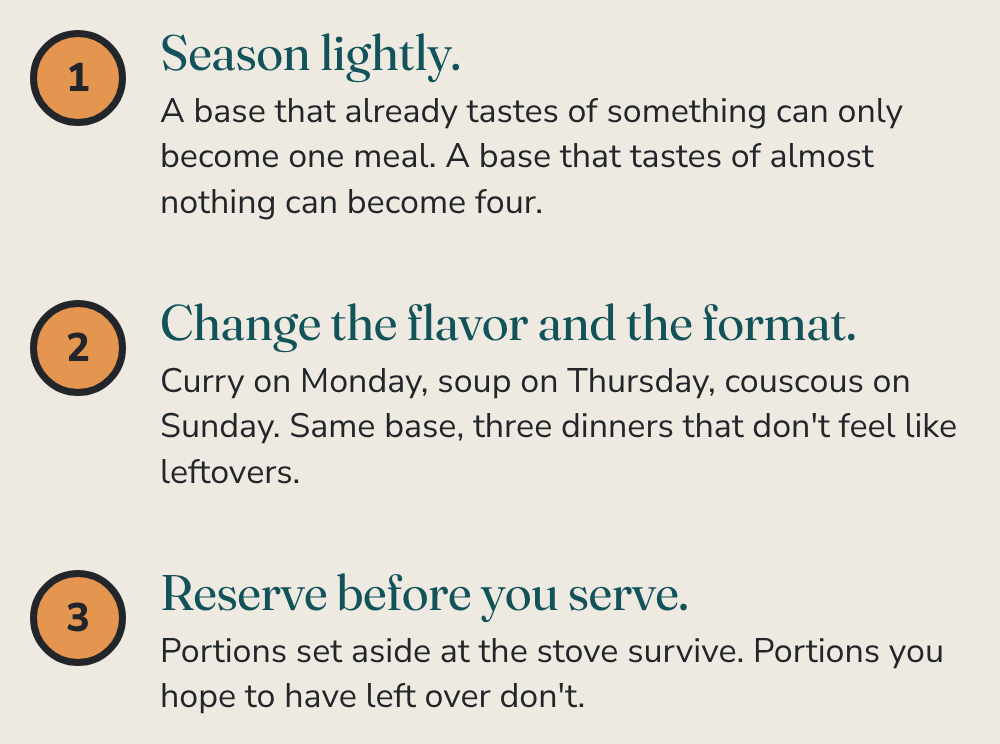
Every guide is printed with the same line on the cover: cook components once, change the flavor and the format, freeze the head start. Here’s what that looks like in a real week.
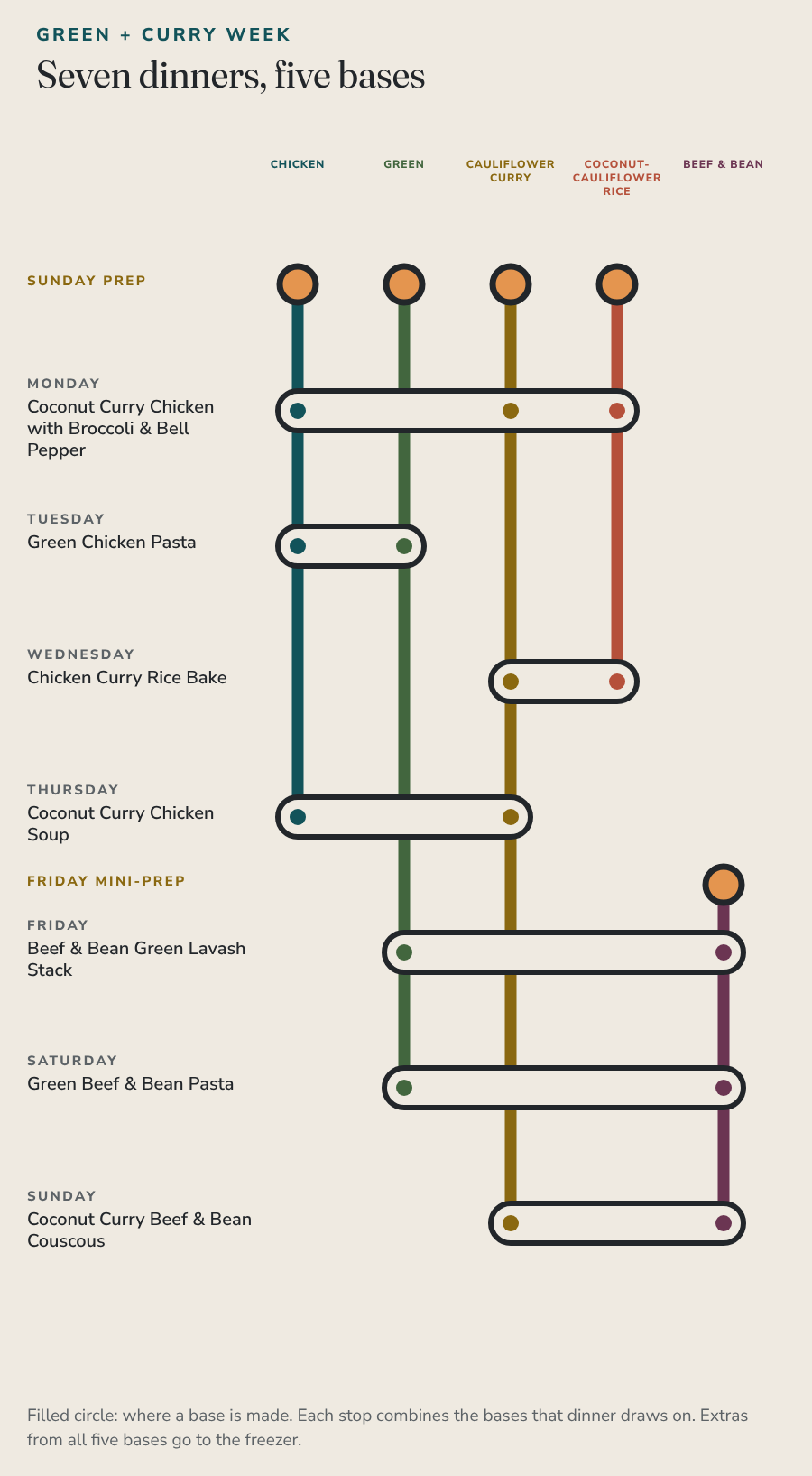
Five bases. Seven dinners. One plan.
This is Green + Curry Week drawn as a map. Each colored line is a base, and each stop is a dinner it feeds. Where lines meet, two bases combine into one meal.
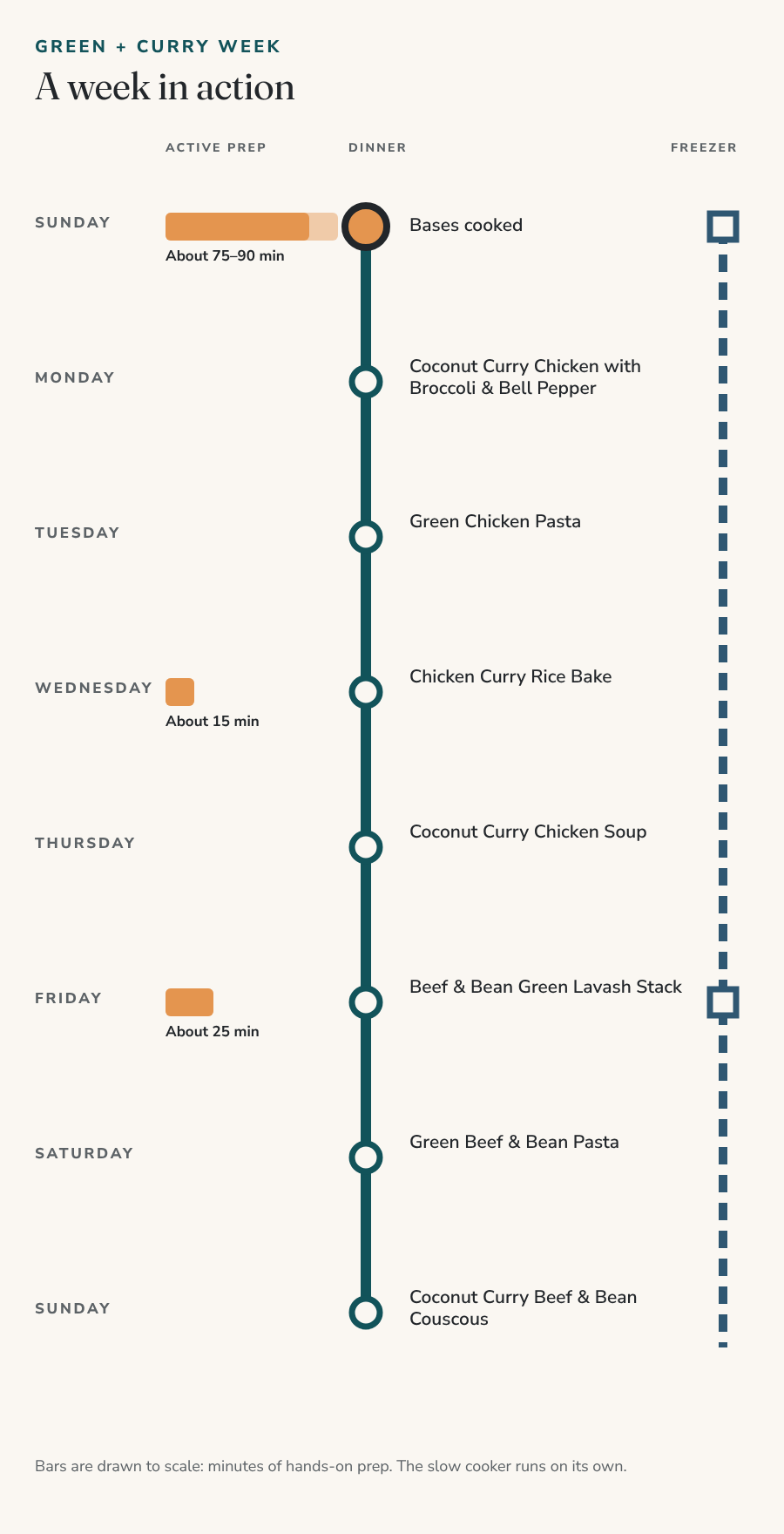
From Sunday prep to a stocked freezer.
The real rhythm of Green + Curry Week: one main prep session, two short mini-preps, and a week of meals that mostly need finishing rather than cooking.
From a career in analytics to the dinner table.
I’m Casey, a working mom with a young child and about 20 years in analytics. My job has always been the same at heart: understand a complicated problem, find the pattern in it, spot the wasted effort, and build a system that makes the outcome better.
Feeding my family was the first problem at home that felt like work. Not the cooking itself, but everything around it: what to eat, what to buy, what to make ahead, what will keep, and how to make one meal work for everyone at the table. Most meal plans hand you seven recipes and leave the rest to you.
So I approached dinner as a systems problem, not a recipe problem. I looked for the ingredients that show up more than once, the preparations that could feed several meals, and the order the work should happen in. Cook a lightly seasoned chicken once, and it becomes a curry, a pasta and a soup. Blend one vegetable base, and it becomes a pasta sauce, a pizza spread and a pot of green couscous.
That became the Base → Transformation system behind every Clever Counter guide. Each week I do the planning, then test the week in my own kitchen. You don’t need to think like an analyst to use it. That part is already done.
Casey, founder
Less deciding, more dining.
The point of all this planning is the part that isn’t planning: dinner on the table, and an evening with less to think about. Try the system for three days, free.