The Pantry Puzzle: Pantry Staples for Flexible Family Meals
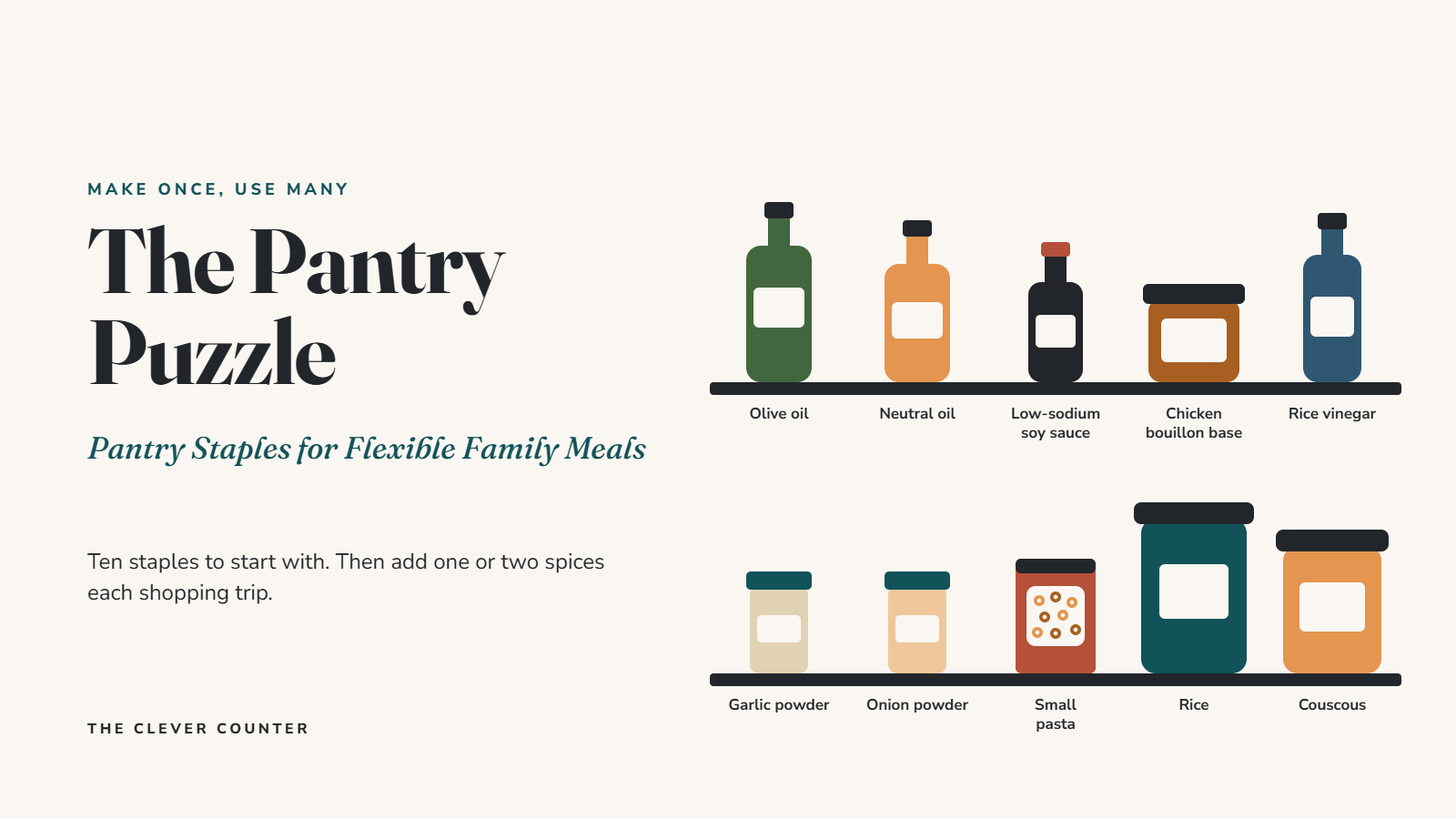
The most useful pantry staples for family meal planning are the ones that change what a meal is. You need a grain or pasta to carry it, a bean or lentil to stretch it, a liquid to turn it into a sauce or a soup, and a few seasonings to point it in a new direction.
You do not need all of it at once. Start with ten items, several of which you probably own, and add one or two spices each shopping trip.
At The Clever Counter we cook one Base, a foundational preparation, and turn it into several different meals across the week. We call that Make Once, Use Many. The Base is the “once.” The pantry is what makes the “many” possible.
Think in jobs, not in lists
A shopping list tells you what to buy. It does not tell you why. Every staple below earns its shelf space by doing one of five jobs.
- Carry: pasta, rice, couscous, barley, farro, noodles. Turn a cup of Base into a full dinner.
- Stretch: chickpeas, butter beans, black beans, lentils. Add protein and bulk; make a leftover into a new meal.
- Transform: coconut milk, canned tomatoes, tomato paste, broth. Turn a thick Base into a sauce, a curry or a soup.
- Steer: soy sauce, rice vinegar, dried spices. Change the direction of the same ingredients.
- Finish: peanut butter, tahini, honey, maple syrup, dried fruit, nuts, seeds. Make a quick sauce or dressing; add sweetness or crunch.
Cooking oils sit underneath all five. Two are enough to start: olive oil for flavor, and a neutral oil for higher-heat cooking and baking.
Carry: pasta, rice, couscous, barley, farro and noodles
These decide what kind of meal you are having. The same Base reads as a completely different dinner over couscous than it does baked with rice.
Couscous is the fastest, because it only needs to steep in hot liquid. Rice is the most flexible. Barley and farro stay pleasantly chewy in soups and reheat well. Noodles turn a stir-fry into a meal.
Pasta has a second job in our house. It is the most dependable Food Bridge we have: a familiar format that lets an unfamiliar sauce come along.
For young children, the CDC lists whole kernels of cooked barley and other whole grains among potential choking hazards. Small pasta shapes, couscous and soft rice are easier starting points.
Stretch: chickpeas, butter beans, black beans and lentils
Canned beans are cooked protein that needs no planning. They turn half a cup of leftover sauce into lunch.
In our Green + Curry Week, chickpeas carry the middle of the week. Chicken covers the early dinners, beef and beans cover the weekend, and a can of chickpeas bridges the gap without another round of cooking.
Lentils cook from dry without soaking, and they thicken as they cook, which makes them useful in fillings and soups.
The same CDC list includes whole beans. For the youngest eaters, flatten or mash them.
Transform: coconut milk, tomatoes, tomato paste and broth
This is the shelf that turns one texture into another. A thick vegetable Base plus broth is a soup. The same Base plus coconut milk is a curry sauce. A spoonful of tomato paste deepens almost anything savory.
I make broth from Better Than Bouillon chicken base rather than buying cartons: 1 teaspoon of base per cup of water. One jar lasts well beyond a single week and takes up almost no space.
Steer: soy sauce, rice vinegar and spices
Seasonings are the cheapest way to make the same ingredients taste like a different meal.
Garlic powder and onion powder are my starting point. Even with no other spices, those two, along with salt and pepper, give chicken a dependable foundation of flavor. Then add one or two spices each shopping trip. The order that follows reflects how versatile I find them, but let the meals you plan to cook guide what you buy next: smoked paprika, cumin, oregano, thyme, coriander, cinnamon, rosemary, basil, and curry powder. Turmeric and ground ginger are useful later, once recipes start calling for them. Our Smoky Red Pepper-Tomato Base uses four of these jars: smoked paprika, cumin, oregano and coriander.
Smoked paprika is worth a special mention for families. It adds a deep, smoky flavor without chile heat.
Low-sodium soy sauce brings savoriness without as much salt, which helps when a toddler is eating the same dinner. Rice vinegar brings brightness. A splash of either can fix a dish that tastes flat. Buy spices in small jars; they fade.
Finish: nut butters, tahini, sweeteners, dried fruit, nuts and seeds
Peanut butter and tahini become a sauce or dressing with a little water, soy sauce or vinegar. Honey and maple syrup balance acidity and heat. Our Honey-Clementine Syrup, a citrus syrup for pancakes, is ¼ cup of honey plus the juice of 2 clementines, which makes ½ cup.
Seeds do more than garnish. We blend pumpkin seeds into our Mushroom & Kale Pesto.
Three safety notes for small children. Honey should not be given before 12 months. The CDC list of potential choking hazards includes whole or chopped nuts and seeds, spoonfuls of nut butter, and uncooked dried fruit such as raisins. Thin nut butters into sauces, grind or blend nuts and seeds, and chop or soak dried fruit.
Optional: baking and breakfast staples
If you bake, three extras go a long way: rolled oats or oat flour, whole wheat flour and ground flaxseed. Our pumpkin mini loaves use all three.
One Base, three pantry transformations
Here is the idea working in a real week. Our Coconut Cauliflower Curry Base is a 6-cup batch made from frozen cauliflower, onion, garlic and ginger, plus three pantry items: 1 cup of coconut milk, 1 cup of broth, and 1 tablespoon plus 1 teaspoon of curry powder.
Three of that week’s meals use the same Base. What changes is what comes off the pantry shelf.
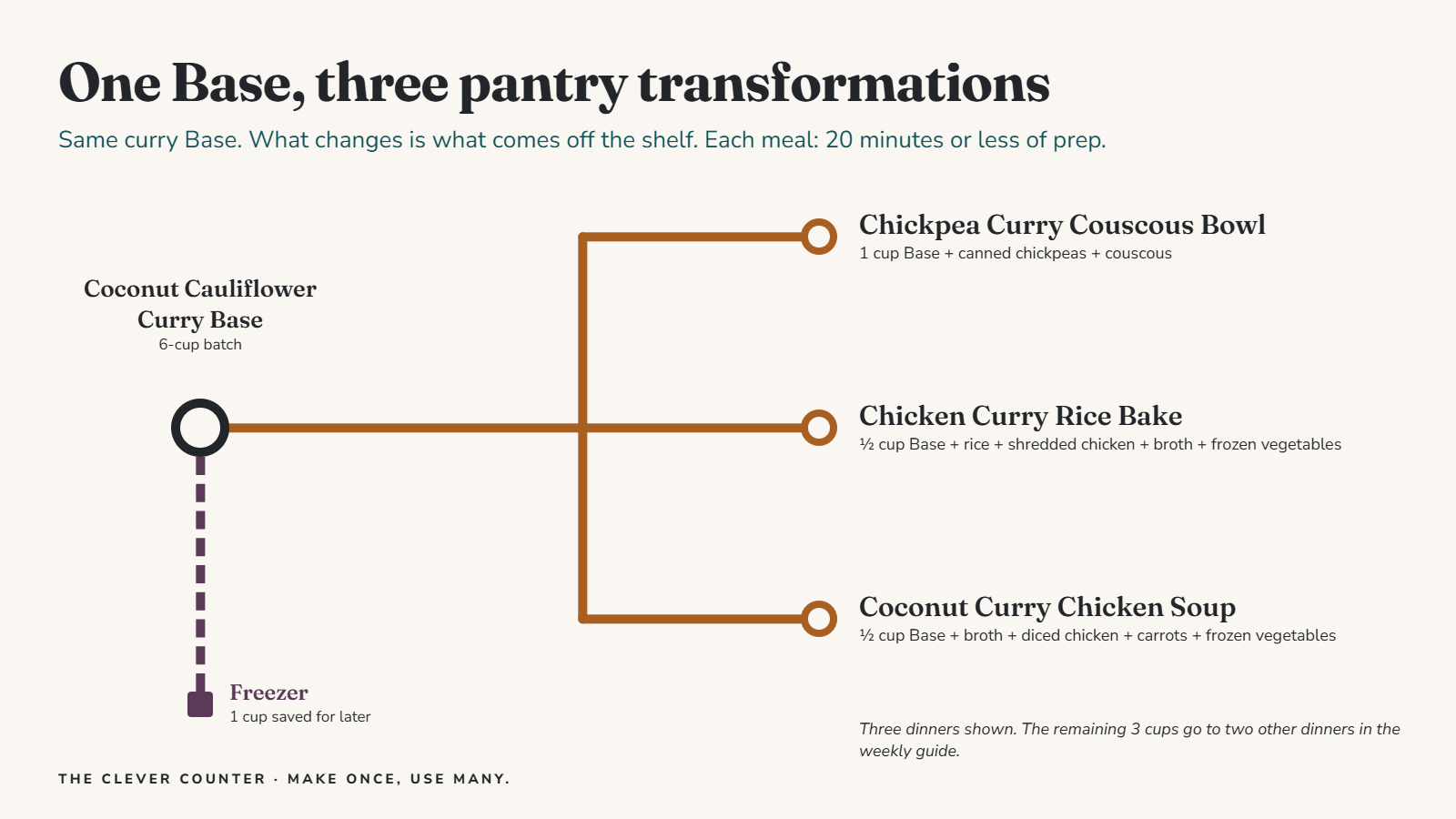
- Chickpea Curry Couscous Bowl: 1 cup of Base with canned chickpeas and couscous. 20 minutes or less.
- Chicken Curry Rice Bake: ½ cup of Base with rice, shredded chicken, broth and frozen vegetables. 20 minutes or less.
- Coconut Curry Chicken Soup: ½ cup of Base with broth, diced chicken, carrots and frozen vegetables. 20 minutes or less.
The Base amounts come from our Green + Curry Week guide, sized for two adults and one toddler. Prep times assume the Curry Base is already made and, for the two chicken meals, the chicken is already cooked. The bake and the soup also need oven or simmering time on top of prep. Three dinners are shown here. The remaining 3 cups of Base go to two other dinners in the weekly guide, and 1 cup goes to the freezer.
A bowl, a bake and a soup: three different dinners, and the vegetables were cooked once. The full recipes are in our Green + Curry Week guide.
Build it gradually
You do not need to buy everything on this list. Check your shelves first; you likely own several of the ten starter items.
These ten are the pantry staples I reach for most often. They are items you can generally buy in larger quantities and use across meals for a month or more. Start here, then add other ingredients as the meals you plan to cook call for them, along with one or two spices or herbs each shopping trip.
The printable checklist sorts everything into three stages: Start Here, Expand Your Options, and Clever Extras.
See the system in a real week.
Our free three-day guide, One Batch, Three Dinners, shows Make Once, Use Many from grocery list to table, with every quantity worked out.
Check your inbox. Your free guide is on its way.